Friday, June 20, 2014

Summer Reading List for Teachers

Summer Reading for Teachers:

Summer is when we teachers recharge, research, and plan. Not only do I read for pleasure by catching up on new middle grades and YA books, I also read to learn. When the school year begins in the fall, I will have finished a number of education-related texts, as well as worked on K-12 Curriculum Mapping and Common Core Curriculum alignment for my district. I love being a lifelong learner!

Below are some of the books on my reading list this summer, a few which shaped me as a teacher, and a peek at what I’ll be reading in August.


Understanding by Design, Expanded 2nd Edition by Grant Wiggins and Jay McTighe
Understanding Design
My principal said, “You must read this book – it is so YOU.” She went on to explain the book’s premise of designing lessons from an end goal and working backward. Since Mrs. Rudolph was so enthusiastic, I knew I had to get a copy. I’m glad I did.

Since working on my National Board Certification, I began looking at learning units this way. I ask myself what I want my students to know and why I want them to know it. Understanding by Design explains how teachers should be goal oriented, intertwine their work with other disciplines or use different strands from the Common Core, and be multidimensional with creating lessons. Throughout my reading, I’ve found so many great quotes about learning and education, as well as ways to strengthen my work in the classroom. It seems as if every few pages I stop and contemplate how the examples apply to me or how I can transpose a sample lesson into my own room.

***************************

The Book Whisperer by Donalyn Miller
Book Whisperer
I’m not sure how many times I’ve read this text…four? Five? Each time, however, I am reinvigorated and encouraged to take the steps needed to help my students on the path of becoming lifelong readers. There is practical advice on how to set up your classroom library, tips on conferencing with students about reading, and ways to streamline your teaching to allow for ample reading. Donalyn is one of the people I follow online, as well, so I can continue to get glimpses inside her reading-centric room.

Next on my list, the follow-up book: Reading in the Wild: The Book Whisperer’s Keys to Cultivating Lifelong Reading Habits, also by Donalyn Miller. I can’t wait to read her companion book. Isn’t that what we all want, for our students to become lifelong readers? Donalyn shares strategies to help us teach reading habits. I'm reading this the first week in July (after my Germany educational trip)

***************************

Real Revision by Kate Messner

Kate worked on this teacher mentor text while we were co-teaching Advanced Creative Writing in our former school. Watching this brilliant educator and award-winning author in practice was as much a learning experience for me as it was for the students. Now you can use revision techniques utilized by children’s authors in your own classroom. When students see the edits done by authors they know, they are more likely to tackle the revisions needed in their own works. Trying various editing techniques help ensure students discover the ones that work best for them, along with building up an arsenal of devices they can utilize when working on future writing pieces.

***************************

I Read it, but I Just Don’t Get It by Cris Tovani
Don't Get It
Writing with authority is what you’ll get from Cris Tovani. She is a full-time high school ELA teacher who also previously taught at the elementary level and worked as a reading specialist. When she explains how students make connections while reading and the technique teachers can use to help them increase fluency and comprehension, she knows her subject. Her passion for her work is also evident and the layout of the book is useful, as most chapters contain a bulleted summary at the end for easy reference.

If you are looking for further guidance, Tovani includes reproducible tools at the end of the text. These are great for helping students make connections with their reading.

So What Do They Really Know? By Cris Tovani
The author explores authentic classroom assessments that are practical and real.

***************************

A Framework for Understanding Poverty by Ruby Paine
Understanding Poverty
In various studies I’ve found the majority of educators are from middle-class backgrounds. According to Dr. Jawanza Kunjufu, 83% of elementary schools teachers are white, middle-class females. For most of my life I have been middle-class, so those are the societal norms I inherently understand. Ruby Paine opens middle-class educators’ eyes with her (sometimes) controversial book on poverty. When I first read this book a few years ago, it not only helped me understand my husband’s background more clearly, it also made me a more effective teacher. If we already know from Bloom that children need their basics needs met before they can advance, Paine shows us how to successfully deal with poverty issues with empathy. Her questionnaires and examples help educators examine the underlying concerns people dealing with poverty have and how they look at their situation and the world impacting them.

Next on my list: Boys in Poverty: A Framework for Understanding Dropout, also by Paine

Now that you’ve perused my list, what teacher texts are you reading this summer? Which ones shaped you as a teacher? Please share your recommendations!
Happy Reading - Marjorie

Thursday, January 9, 2014

Japanese Poetry

Today my students conducted short presentations on various styles of Japanese poetry. Working in small groups, they researched the following: haiku, renku, renga, haiga, tanka, senryu, mondo, and - one of my personal favorites - haibun. Each group not only reviewed the rules of each style, but also shared the poem's history and gave classic and modern examples.

Their presentations were clear, well-planned, and interesting - every last one of them!

Tomorrow we are going to experiment with writing in the different styles. Perhaps I'll have a few to share...


Tuesday, December 31, 2013

New Beginnings

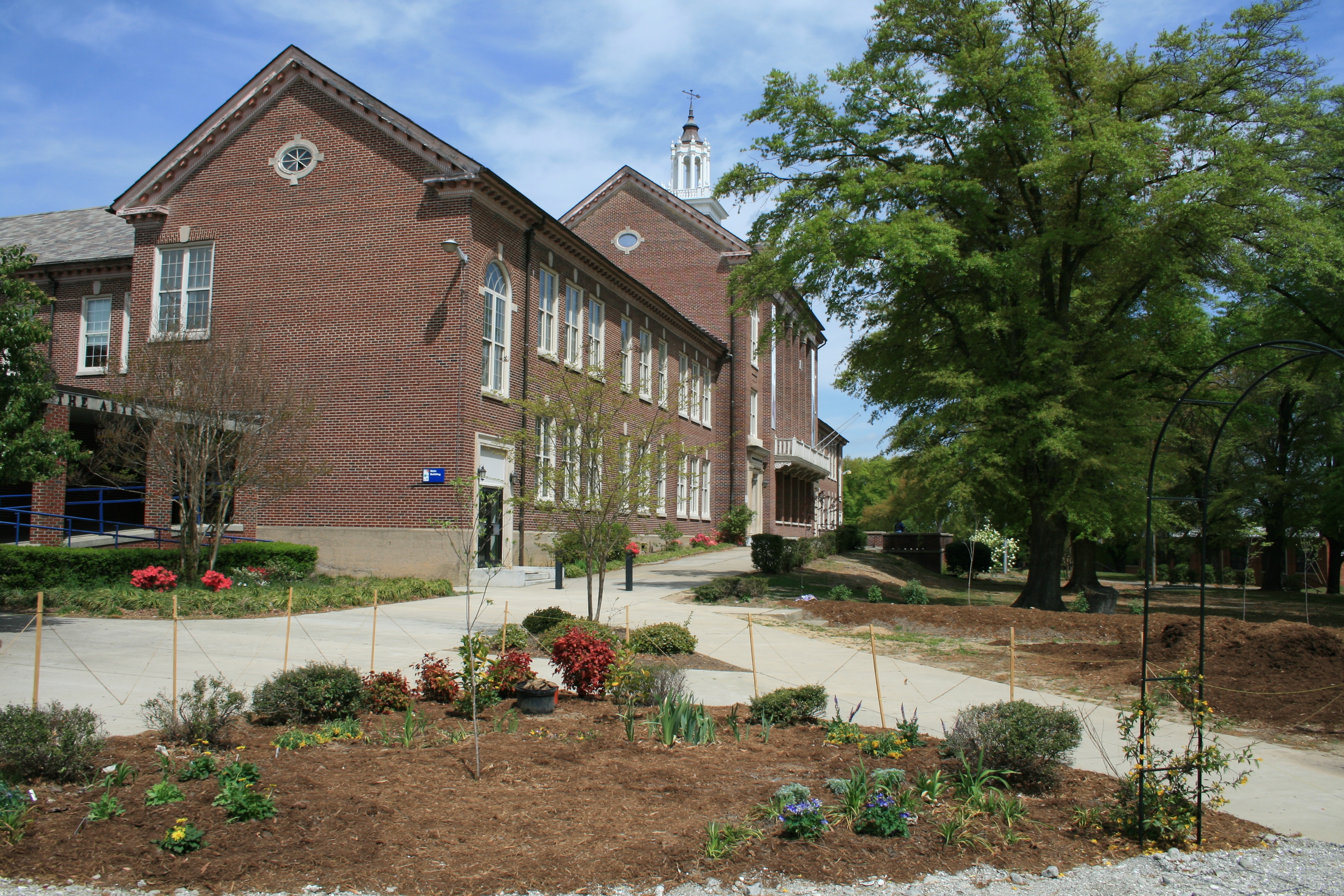
Early College High School (photo: Wikipedia)


The start of a new year: I'm beginning a new job!

Early College High School, located on the NCCU campus, is geared toward students who have a drive to succeed: they are high schoolers who will complete two years of college during their four years. 


This first semester, I'm teaching World Literature. We're going to examine how geography and culture shape writing; for each place study, I'm going to feature classic and contemporary pieces, fiction and non-fiction, poetry and prose.

As part of understanding each country of study, I want to infuse the author's culture into the class. We'll look at art, listen to music, and eat the food. Clips of Anthony Bordain will definitely make an appearance!

"If you want to know a country - read its writers" - Aminatta Forna

REQUEST: I'm gathering suggestions for both classic and contemporary authors (poetry and prose). The authors must be from Asia, Africa, The Middle East, Eastern Europe, or South America. (No British or American authors - that's another class)

Saturday, September 8, 2012

Goodbye, Too Soon


The world became a lot less funny this week.

My cousin John lost his hard-fought battle against cancer and died in a Hospice facility in Charleston, WV.

He was one of the most hilarious people I knew and could turn a simple story into one that would make you do one of those laughs where you accidentally honk like a goose or snort like an old mule.

We always joked he was a ghostwriter for Larry the Cable Guy.

Most of them I wouldn’t tell in a church….like the Old-Naked-Guy story or the Stole-A-Beer-And-Buried-It-To-Drink-Later one or the Before-He-Married-Robin-Diarrhea story. That one was my favorite. It didn’t end well and the joke would usually be on John, but he’d tell it anyway, without much prompting.

He’d pull you in with his good ol’ boy drawl, those piercing blue eyes, and the lip he could curl like Elvis. Before you knew it, you’d be begging him to stop – just so you could catch your breath, or wipe the tears from your eyes, or run real fast to the bathroom (for those cousins who have a weak bladder, which thankfully doesn’t include me, but they will remain nameless, but their initials are Trisha.)

He was a gentle soul, a good dad, and a loving husband. He coached his kids’ team, did maintenance on his mom’s house, and would lend a hand when needed to friend and family alike. I don’t think I was ever mad at him, not even once. Not even the time when he mooned us or the time he locked us in the cubby closet.

John was the one who took me to a mountaintop top party one rainy night and we hung out in the back of an abandoned tractor-trailer, listening to the strains of a country song and the rhythm of a clogger dancing up on the roof. A soft rain was falling and we dangled our legs off the back end of the trailer and talked about what we wanted to do when we grew up.

And here we are, all grown up…and he left us too soon.

But tomorrow, after the funeral, when we are all standing around in our pretty black outfits sipping punch, I’ll be thinking of the times he made me laugh until I cried. And I’ll smile and cry at the same time, in honor of John.

Sunday, August 19, 2012

New Kid in Town

With my father in the Air Force when I was growing up, I attended many different schools. Two kindergartens, two second grades, two thirds….you get the idea. So I know a little about trying to fit in, figuring out “the rules”, and finding friends.

Tomorrow I have another first. After twelve years at Stafford Middle School in Plattsburgh, NY, I accepted a teaching position in North Carolina. Soon I will teach 7th grade students in the Chapel Hill-Carrboro School District at Culbreth Middle School.

Last Thursday, the other new teachers and I started school early and received such a warm welcome. From the opening gathering with the superintendent to lunch with the principal; from the custodians helping us prepare our rooms to the organized binder filled with information; from the box of supplies prepared for each of us to the gathering with our mentors at the principal’s home, we have been made to feel valued and welcomed.

In the morning, I’ll drive to my new school and meet the entire faculty and staff. Once again I’ll put into practice my “new kid” survival techniques. If you know a new kid or are going to be one yourself this fall, here’s how I do it.


1)  Smile – I keep a smile on my face even when I feel nervous, scared, or lonely. It is much easier for others to talk to me if I look approachable.

2)  Learn Names – I borrow a yearbook from the previous year, write down names when I’m in meetings, and study the nametags on doors. Then when I talk to people I try to use their name in conversation, as well as use little pneumonic devices to help me.

3)  Be Kind – Is there someone who needs help? Appreciate what others do for you.
Give honest compliments. Positive energy is the best kind.


4)  Be Open - Let others get to know you. Go outside your comfort zone. Volunteer. Raise your hand. Participate in conversations. Talk.

5)  Listen – Pay attention to what other people say. Learn what you can about their lives and hobbies. Take an honest interest in them.

For those of you who are in the same situation as me: Have a great time with your new beginning! I love to explore new places, make new friends, and learn about new ideas. 

Throw your arms wide open ~ live your life with joy.


Wednesday, July 11, 2012

Brazil ~ Society


One of the most amazing parts of the trip to Brazil is how Kwame Alexander arranged for us to tour historical sites of different Bahian cities through the Ministry of Culture.

I am particularly grateful for Paula Riberio (pronounced Pawl-lah), the student intern who accompanies us around on our travels. She is easy-going, helps us navigate the ordering of food, and participates in good-natured haggling in the market.

Whenever I travel, I like to visit with students and get their take on their country’s issues. Paula brought her friend Matheus along one day and I was glad to sit near him and have lunch. He is a business major at Fundação Getúlio Vargas, which is a highly ranking business university in Rio de Janeiro and São Paulo. I asked him what he thought the top five problems were facing Brazil.

“Education,” he replied quickly. He indicated it is the number one issue in his mind and talked about the disparity between those with wealth and children living in poverty. We also discussed the economy, hydropower, healthcare, taking care of the elderly, and homelessness. He was knowledgeable about his country and sincere about the concerns we discussed.
 
The poverty here is saddening and pervasive. In Cachoeira we went into the favela with João (he is a teacher) and walked through the section of the city where Afro-Brazilians who are poor live. Although they are living in substandard housing, their sense of community is strong. On the way home, driving through the countryside, I saw families gathered around outdoor fires, cooking dinner and listening to music under awnings.
Favela of Cachoeira

Favela of Cachoeira


One evening we went to Itapuã and walked around through the barrio, a neighborhood marketplace. (Think: a food court, outdoors, with samba music!) It has the feel of a festival or fair each evening. People sitting at outdoor tables having a coffee (which is incredible here), greeting friends with a double kiss, and laughing into the evening hours. We befriended the family that owns an açai stand. The açai berry is from a type of palm tree and is very rich in vitamins. They make a sort of slushy sorbet from the berries and top it with chopped bananas and granola. It is amazing – eating açai is like tasting frozen sunshine. I could eat it every day.


Learning about the culture, history, and daily lives of the people of Brazil has been such a blessing…I feel so fortunate to be here!


Sunday, July 8, 2012

Five Top Experiences in Brasil/Brazil (so far)

With thanks to Kwame Alexander and his BID.org Fellowship, I am in Brasil/Brazil working my book and meeting Brazilian writers. We also take time periodically to devour the sights, sounds, and FOOD of Brazil!

Here are some favorite experiences so far:


ONE: Exploring
The Secretary of Culture has been so gracious to us and arranged for us to tour various historical sites.
We were so fortunate to have the lovely Paula (pronounced: pah-ooh-lah) help us navigate the streets and the language.

She spent more hours with us than you can imagine. And her smile never dimmed.


TWO: Exchanging

Words, ideas, and our hopes for the future. Poets came to the villa with dinner and read their work to us. It was an evening filled with heartfelt poems and beautiful songs.


Another evening we went to a gathering of poets at a club, where an open mike beckoned participants to find community through words.


THREE: Eating
The food in Brazil is so delicious. My favorite? The mangoes, dripping with sunshine. No, wait, the Brazilian beef, cooked over a wood fire. No...the beans and rice. Ooh! I also like the fresh seafood. And the coffee.
Did I mention the plantains?


FOUR: Learning
We are so grateful to have people like João De Moraes Filho and others escort us during our visits to various cities. 
We have visited many locations of the UNESCO World Heritage sites and heard about heroes from
 the past, as well as the impact of history on the present.
Our walking tours have taken us six to nine miles some days and have ranged from the streets where a revolution began to museums filled with art and photography.


FIVE: Appreciating 

From bits of sea glass and pastel shells, to thundering surf and distant lighthouses, Brazil has wonders to find in many places.


UP NEXT: People, Architecture,
                                                      and Daily Life of Brazil